
your data is your moat. no one else has your traces, docs, evals. castform shapes them into a data recipe optimized for your task.
3,000+ models trained
fully managed training. castform handles gpus, orchestration, model support & scaling. you define what the model should get good at.
full observability while the model learns. watch every step as it trains. catch issues early and evaluate performance at any point.
you own the weights. export the weights anytime and serve them on your own stack, or deploy on castform's inference cloud.
how teams use castform
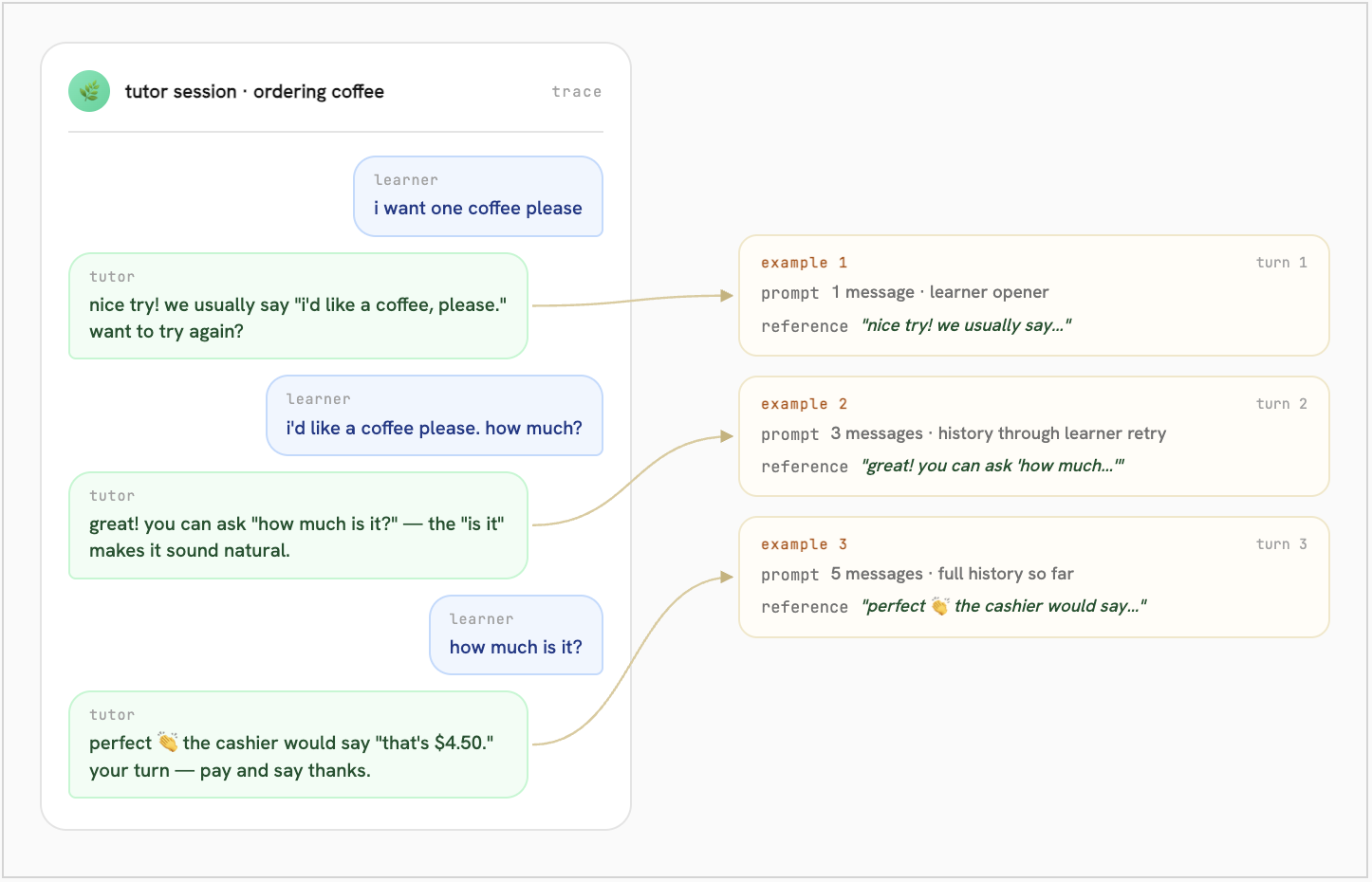
castform x elsa
turning real-world traces into better product-specific models
elsa’s frontier-model tutor was too advanced for beginners. with castform, they post-trained a model on their production conversations to match each learner’s level, at half the cost and latency.
read the post →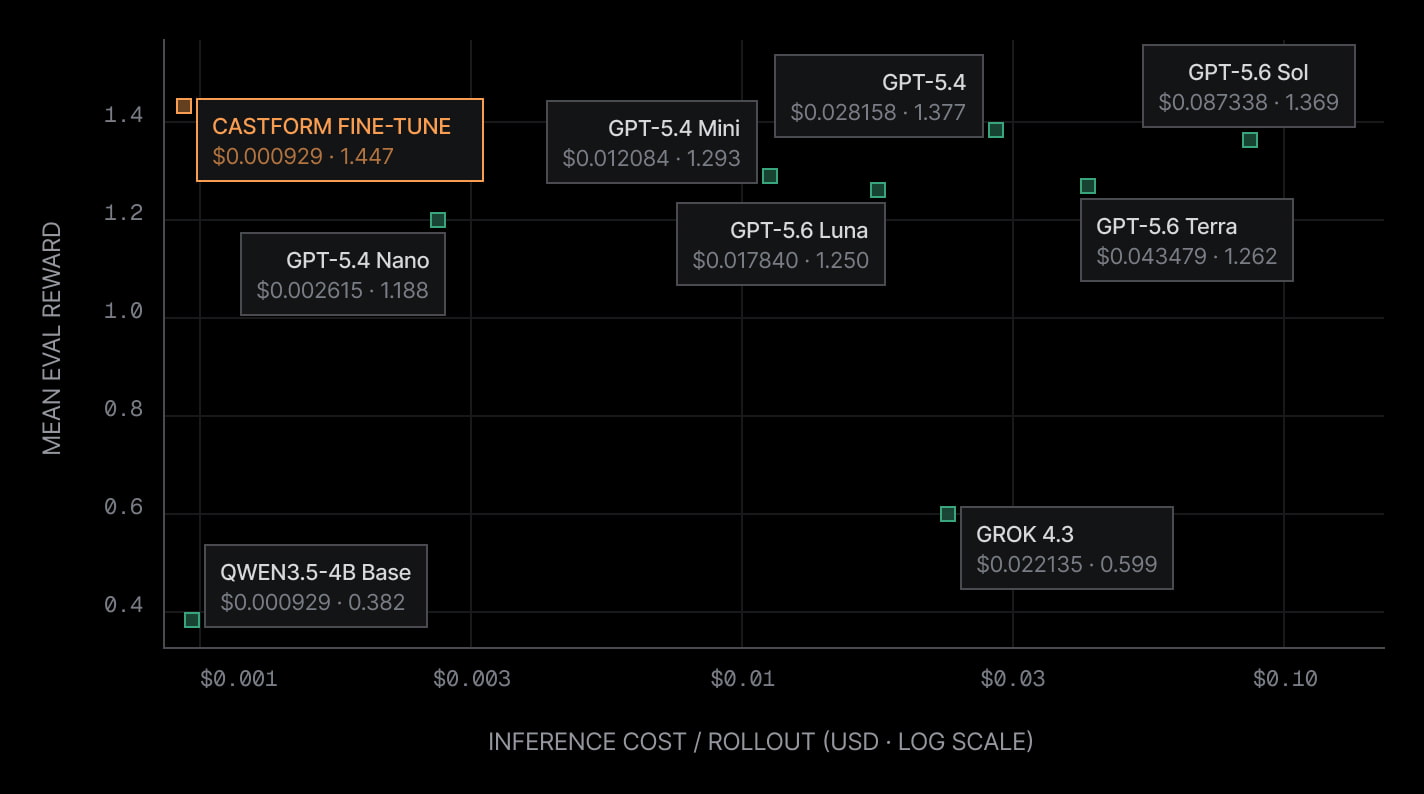
castform x neon
training 100x cheaper retrieval models
using postgres data in neon to train a 4b open model that matches frontier accuracy at a fraction of the inference cost.
read on neon.com →use cases
push the pareto frontier on the tasks & metrics that matter to you
leverage your production traces to train a better, cheaper model
train a low-latency agentic search model
train a classifier that knows your taxonomy
train a coding agent on your codebase
train a pii masking model
train an agent that reliably calls your internal tools
train a vision model to read your diagrams and screens
train an agent that finishes long multi-step tasks
and many more. get in touch →
questions?
do i need ml or rl expertise?
no. castform is designed for engineers and researchers alike: it works out of the box with no ml expertise, and exposes advanced controls for those who want it. you bring your data and define what success looks like, and we handle the rl algorithms, environment scaffolding, distributed training, and infrastructure.
what use cases do you support?
virtually anything rl fine-tuning. if you can define verifiable success metrics for your task, we provide the infrastructure and ml algorithms to fine-tune a model to optimize for those.
you just need to set up the two things the trainer needs: an environment (what the model has access to, and the reward signals that define how the model is scored) and a dataset (the examples it trains on).
to make it easier, we provide automated dataset generation and environments for training rag agents and fine-tuning on production agent traces.
how do i get access?
you can start training right away by signing up at app.castform.dev. it is fully self-service and pay-as-you-go, with enough free credits for new users to trial their first training run.
who owns my data and the trained model?
you do. we train readily available open-source models on your data, and you can export the trained weights at any time. apply them and deploy the new model wherever you like. any data you upload for training is stored securely and used only for your training runs, and can be deleted at any time.
what models do you support?
check out our models & pricing page. if you are interested in training a different model than what we currently support out of the box, please contact us.
how does pricing work?
castform is pay-as-you-go: you only pay for the compute you use during training runs. there are no seats, no monthly minimums, and no lock-in. new users receive free credits to trial their first run.
see the full breakdown on our models & pricing page.
how can i learn more?
check out our docs for guides, examples, and the python sdk reference.
prefer to talk it through? reach out at castie@castform.com and we'll help you figure out whether rl fine-tuning is a fit for your use case.